
 English
 Favorites
  Account
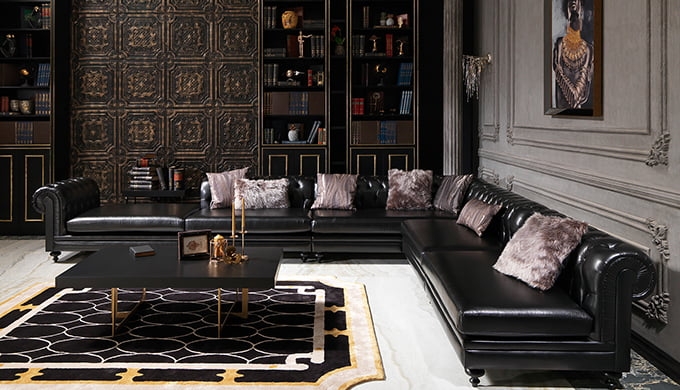
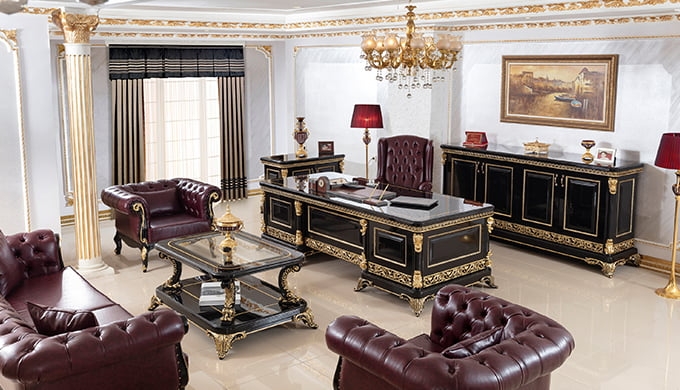
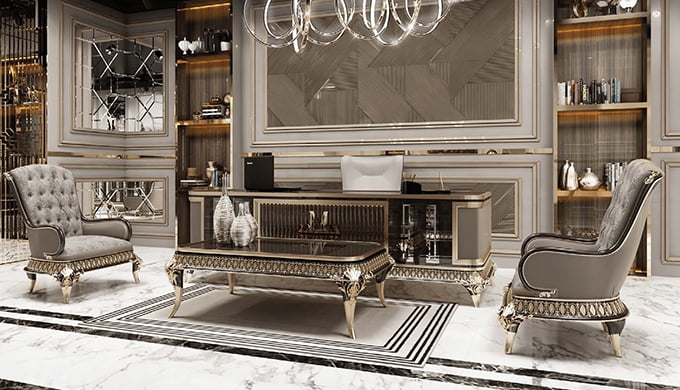
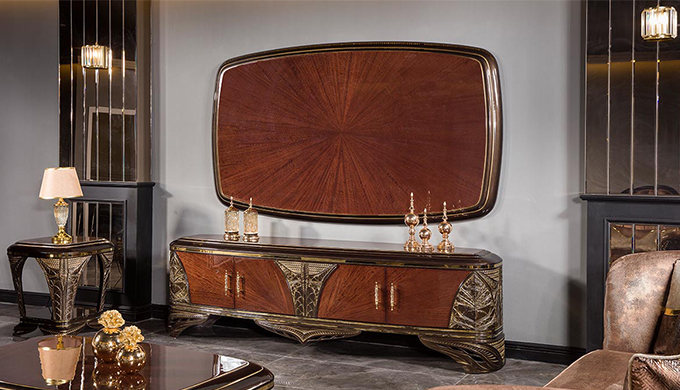
In home decoration, living rooms are both the center of social life and the areas where we reflect our personal style in the most refined way. Making a living room perfect requires much more than just choosing furniture; it is essential to add depth, light, and soul to the space with the right accessories. Undoubtedly, mirrors are at the forefront of these accessories. A strategically positioned mirror can instantly illuminate a dim room, make a narrow space appear twice its size, or artistically highlight an architectural focal point. However, hanging mirrors randomly can cause eye-straining reflections or an unbalanced flow of energy in the space. In this comprehensive guide, prepared with an interior designer’s precision and decoration expertise, we discuss exactly where and how you should position mirrors in your living room with all the technical details. Get ready to add a luxurious, spacious, and modern touch to your living room with architectural tips inspired by global design trends.
The Power of the Mirror: Managing Spatial Perception and Light
Mirrors are not merely functional objects in interior design; they are also powerful architectural tools that manipulate light and volume. Proper placement optimizes the natural light sources of the room, minimizing the need for artificial lighting. Reflecting daylight from large windows into the darker corners of the room, in particular, creates an inviting and energetic atmosphere in the living room.
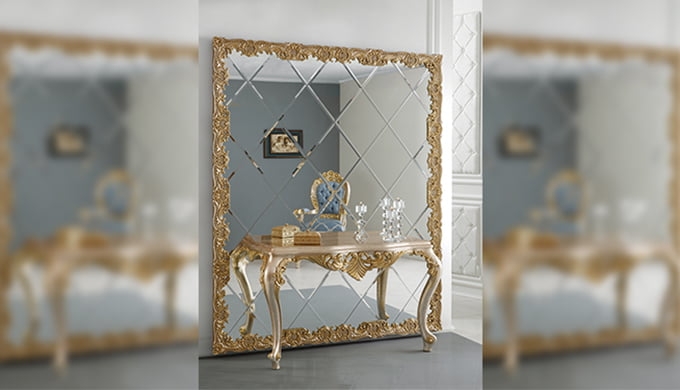
In addition, the “Quiet Luxury” and avant-garde design lines frequently applied in modern interiors rely on the ability of mirrors to create an illusion of depth in a space. A mirror placed at the right angle visually removes wall boundaries, expanding the volume of your living room. To maximize this effect, you can browse our Console Mirrors collection to view aesthetic designs and put an architectural signature on your living space.
Synchronization with Natural Light Sources
Directing light correctly is the first rule you should pay attention to when choosing the wall where the mirror will be hung. Instead of placing the mirror directly opposite the window that receives direct sunlight, try positioning it on the side walls that face the window at a right angle. While direct opposite placements can cause glare and blinding reflections, side wall placements soften and distribute the light into the room.
Mirror Positioning Rules in Different Areas of the Living Room
There are many alternative areas where a mirror can be hung in a living room. However, each area has its own scale, height, and aesthetic balance. Here are the most accurate positioning points according to the architectural structure of your living room:
1. Behind the Dining Table and Over the Console
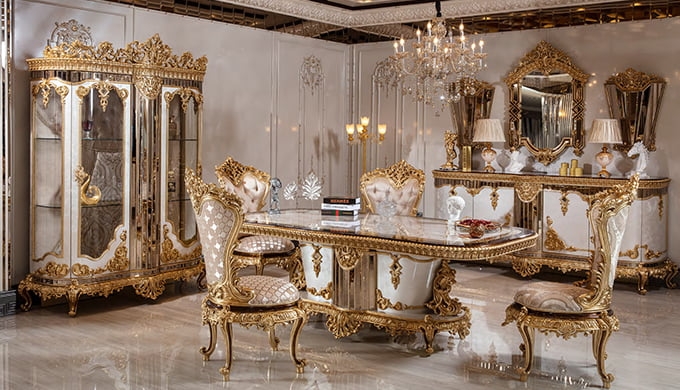
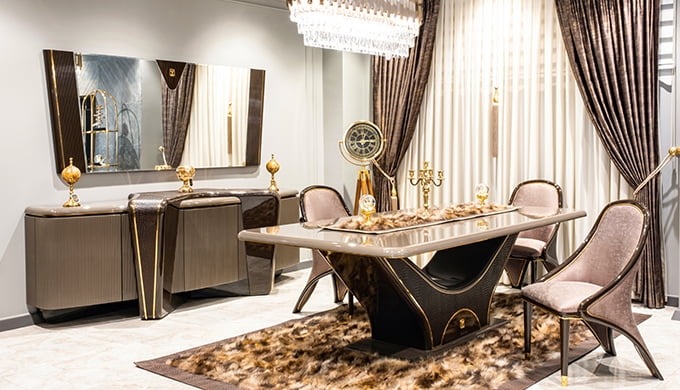
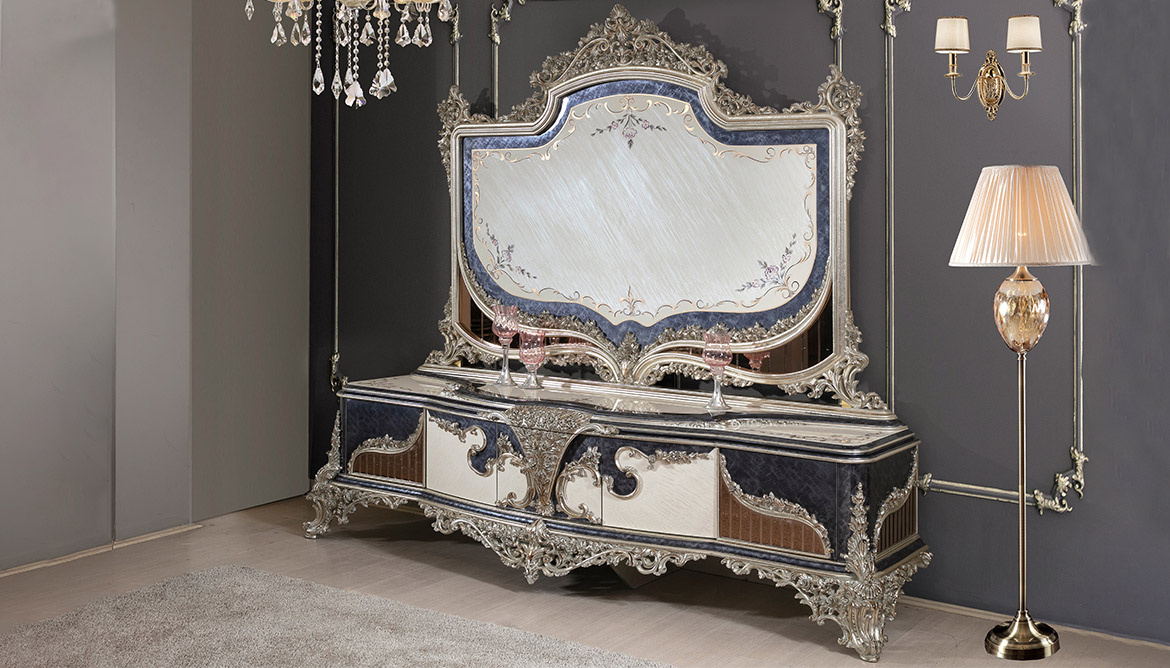
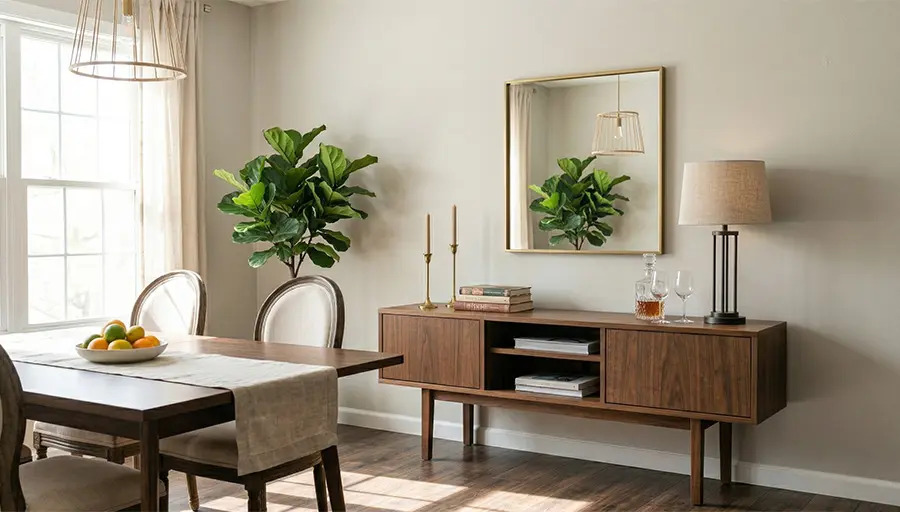
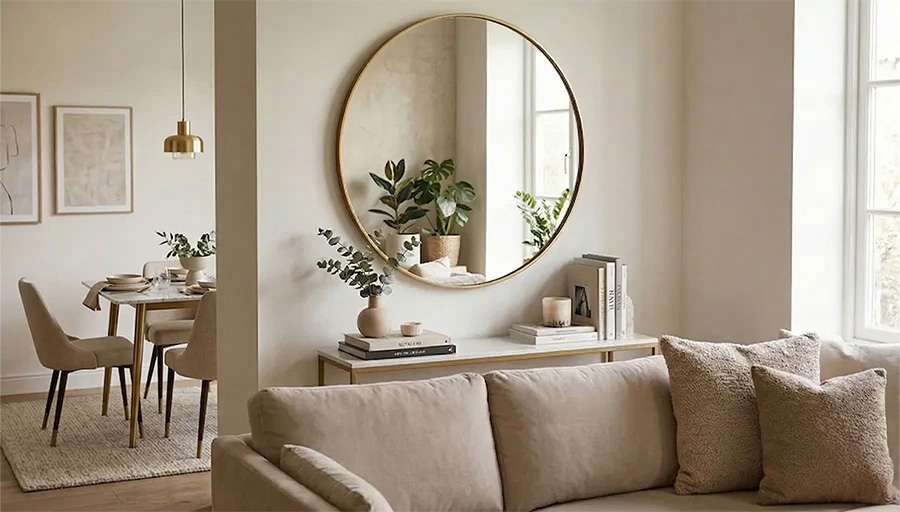
The dining room area is one of the regions where mirrors look the best and yield the highest functional efficiency. A large, horizontal mirror or a stylish mirror combination to be hung over the console creates a wonderful ambiance by reflecting candle and chandelier lights during evening dinners.
- Height Measurement: The bottom edge of the mirror to be hung over the console should be approximately 15 to 20 cm above the console surface. This gap prevents decorative objects like vases and candlesticks you will place on the console from completely blocking the reflection.
- Width Ratio: The width of the mirror should be between 60% and 80% of the total width of the console. A mirror wider than the console visually disrupts the balance.
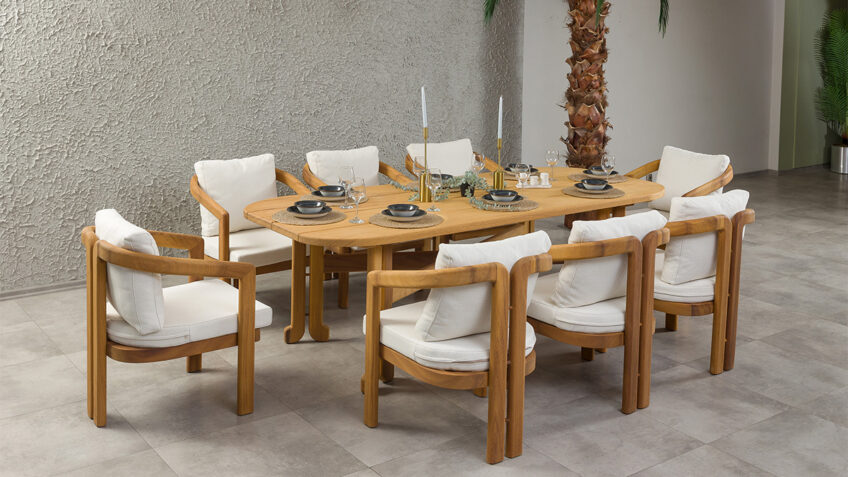
To achieve a noble look in your dining area and capture contemporary design lines, you can visit our modern Dining Room Sets page to get inspiration and combine them with unique furniture.
2. Wall Placement Behind the Sofa
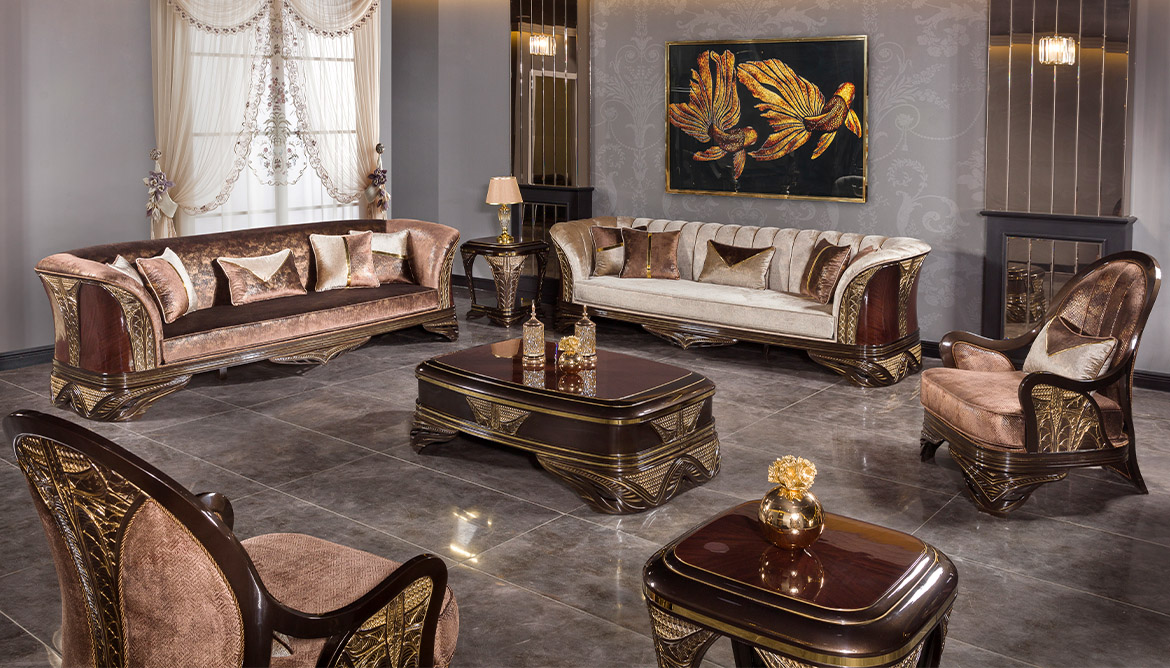
The large blank walls behind the sofas, which form the main seating group of the living room, are excellent canvases for mirror placement. Especially if you want to create a high-ceiling feeling, you can choose vertically designed mirrors or multiple mirror sets hung side by side.
- Safety and Distance: The bottom edge of the mirror to be hung behind the sofa should be at least 25-30 cm above the back cushion of the sofa. This eliminates the risk of hitting the head on the mirror when leaning back.
- Visual Alignment: Center the mirror so that it is exactly in the middle of the sofa. Asymmetrical placements should only be preferred if a conscious gallery wall concept is being applied.
- Scale Balance: Hanging a very small mirror behind a large three-seater sofa makes the wall look empty and insufficient. Models with a minimum width of 100 cm should be selected.
3. Above the Fireplace or Focal Point Placement
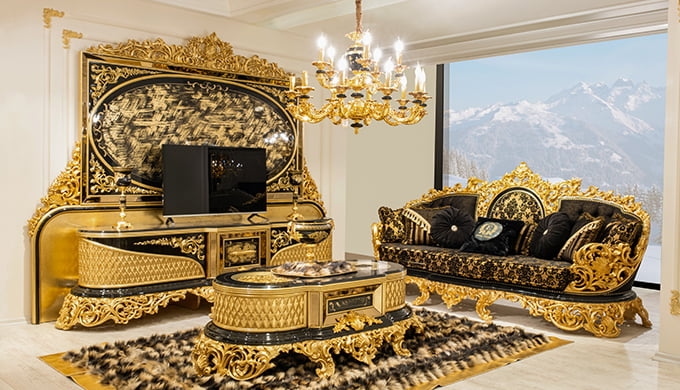
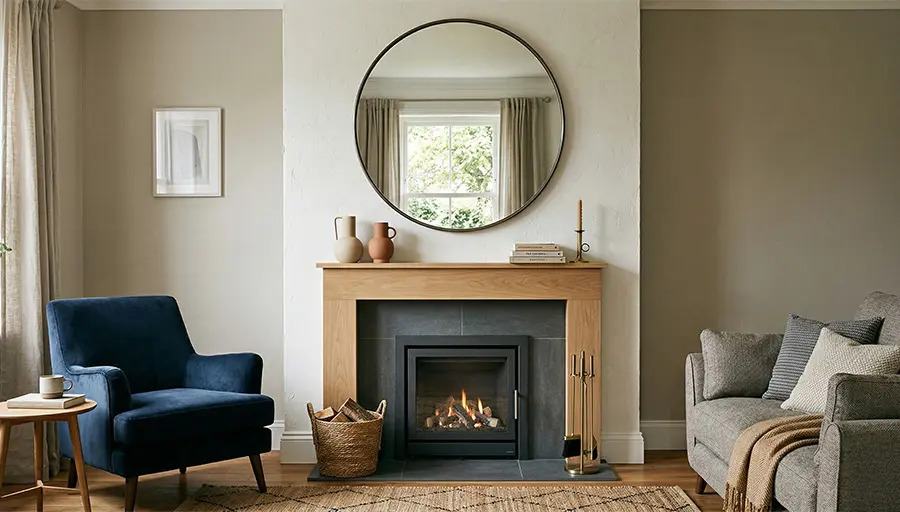
If you have an architectural focal point such as a fireplace or niche in your living room, positioning the mirror exactly over this area is a classic and timeless design rule. A mirror placed over the fireplace draws all the attention in the room. In this placement, the mirror having luxurious frame details increases the sense of craftsmanship in the living room. Handcrafted frames made of kiln-dried hornbeam wood or PVD titanium-plated metallic details add a refined atmosphere to the space.
Technical Measurement Guide in Mirror Selection and Installation
The height and size of the mirror are just as vital as where it will be hung. A mirror hung at the wrong height can offer reflections contrary to human anatomy, causing a feeling of discomfort. The golden standard accepted by interior designers is the “eye level” rule.
The center point of the mirror should be approximately 150-155 cm above the floor. This measurement is the ideal height at which an average standing person can comfortably see their own face and torso. If the mirror is opposite the seating area and will generally be looked at while sitting, this height can be pulled down a little lower.
To design the most suitable seating area for your living room concept and capture the perfect comfort that your mirror will reflect, you can examine our new season Sofa Sets collection.
In the table below, you can see the most accurate mirror dimensions and mounting heights in detail according to living room types and intended uses:
| Living Room Type / Area | Recommended Mirror Form | CIdeal Dimension (cm) | Mounting Height (Bottom Edge from Floor) |
|---|---|---|---|
| Small and Narrow Living Rooms | Vertical Rectangular or Full-Length Mirror | 60 x 180 cm | 10 – 20 cm (From Floor) |
| Above Console / Sideboard | Horizontal Ellipse or Rectangular | 120 x 80 cm | 15 – 20 cm above the console |
| Wall Behind Sofa | Large Round or Multiple Geometric | Diameter: 90 – 110 cm | 25 – 30 cm above the sofa |
| Spacious and Avant-Garde Living Rooms | Large Wall Mirror with Solid Frame | 150 x 150 cm | 40 – 50 cm above the floor |
Mirror Positioning Tips According to Feng Shui and Decoration Disciplines
The ancient Eastern philosophy of Feng Shui, which regulates the energy of the space, and modern decoration disciplines argue that the position of mirrors in the living room directly affects the perception of prosperity, peace, and abundance in the home. According to these principles, you should pay attention to the following rules when hanging mirrors:
- Multiplying Abundance: Position your mirror to reflect a beautiful view seen from the living room window, a green tree, or the sky. This brings the positive energy and nature outside into your home. Similarly, mirrors reflecting the dining table symbolize the multiplication of fruitfulness and abundance.
- Avoiding the Entrance Door: If your living room opens directly to the entrance of the house, you should not hang the mirror directly opposite the main entrance door. According to Feng Shui, positive energy (Chi) entering through the door hits the mirror and leaves the house. Hanging the mirror on the side wall of the door is a much more correct approach.
- Not Reflecting Clutter: Mirrors double everything they see. For this reason, avoid hanging mirrors at angles that see a desk where your bills are piled up, a messy storage corner of the living room, or cable clutter. A mirror should always reflect aesthetic, orderly, and clean areas.
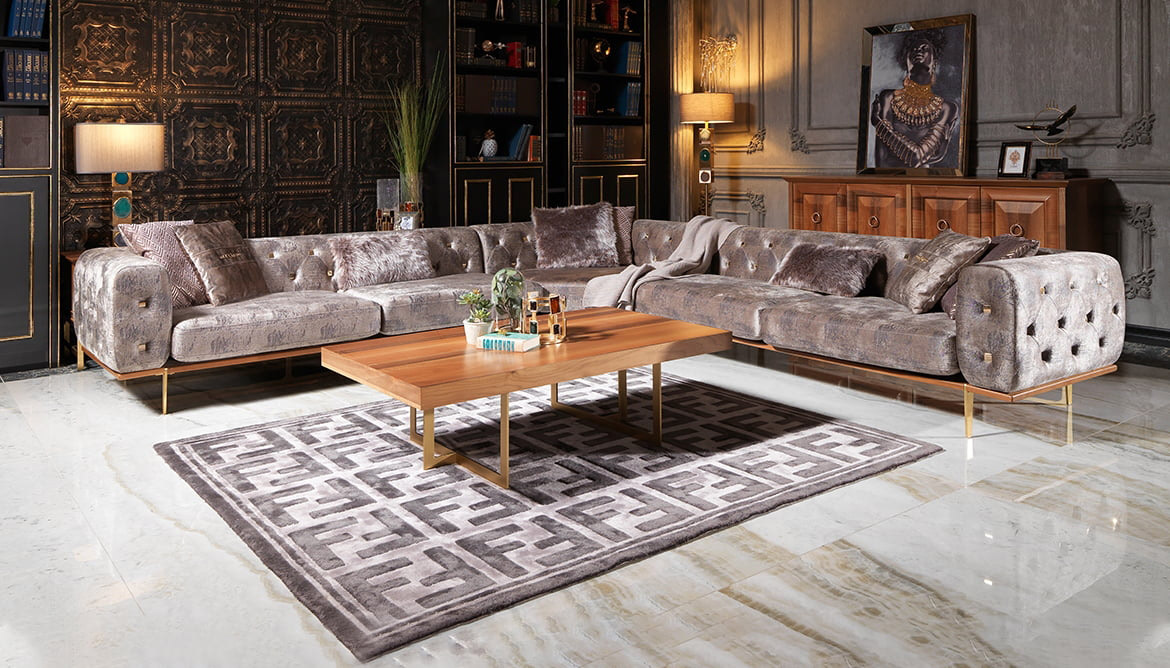
If you want to create a minimal and organized area in your home with modern designs, you can evaluate our luxury Corner Sofa Sets options with functional modules, and always see an orderly aesthetic in reflections.
The Importance of Material and Material Quality
The quality of the mirror itself and its frame affects the holistic perception of luxury as much as the wall where the mirror will be positioned. Poor quality glass can darken over time or cause wavy reflections, straining the eyes. Your preference should always be for high-quality float mirrors. In frames, matte stainless steels are timeless investments for modern spaces, while masterfully hand-carved solid hornbeam woods are ideal for classic and avant-garde spaces.
Frequently Asked Questions (FAQ)
1.Can a mirror be hung opposite the television in the living room?
No, hanging a mirror directly opposite the television is not recommended. Movements and lights reflected from the mirror while watching television cause serious eye strain and distraction. It is more aesthetic to hang the mirror next to the wall where the television is or on the wall behind the TV unit.
2. Where should a mirror be placed to make small living rooms look larger?
In small living rooms, you should place the mirror on the longest wall of the room and, if possible, at a right angle to the window. A large full-length mirror or a wide frameless mirror mounted flush to the wall will maximize the perception of depth and make the living room look twice as wide.
3.Is it right to hang two mirrors facing each other in the living room?
Absolutely not. Hanging two mirrors directly facing each other creates an “infinity corridor” effect in interior design. This creates an optical illusion that can cause a claustrophobic feeling, dizziness, and restlessness in people staying in the room. Mirrors should always face different angles.
4.How high from the floor should the mirror be?
As a general rule, the center point of a single mirror to be hung on the wall should be 150-155 cm above the floor. This is the standard eye level. If the mirror is hung over a piece of furniture (console, sofa, etc.), a gap between 15-30 cm should be left between the furniture and the mirror.
5. Should a round or rectangular mirror be chosen for the living room?
This choice depends on the lines of the furniture in your living room. If cubic and modern furniture with sharp lines dominate, round or oval mirrors should be preferred to soften the environment. On classic, long, and wide walls, rectangular mirrors are more functional to emphasize the horizontal or vertical architecture of the space.