
 English
 Favorites
  Account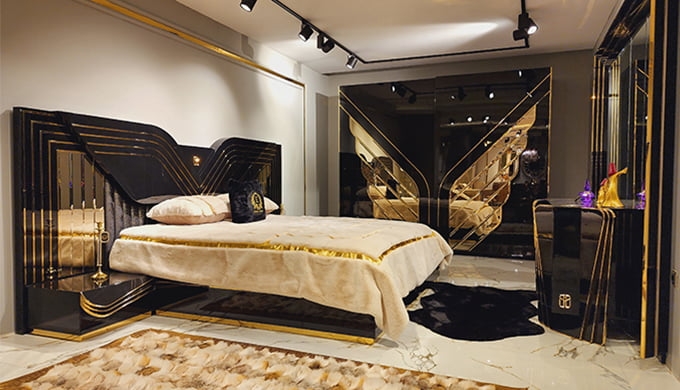
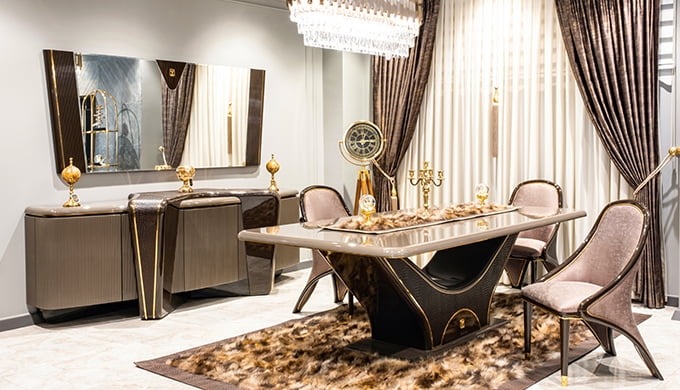
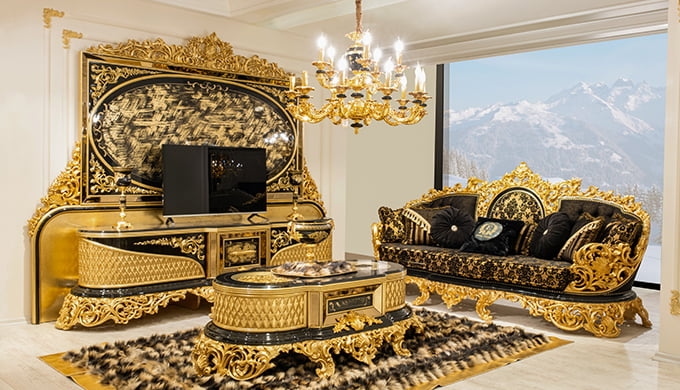
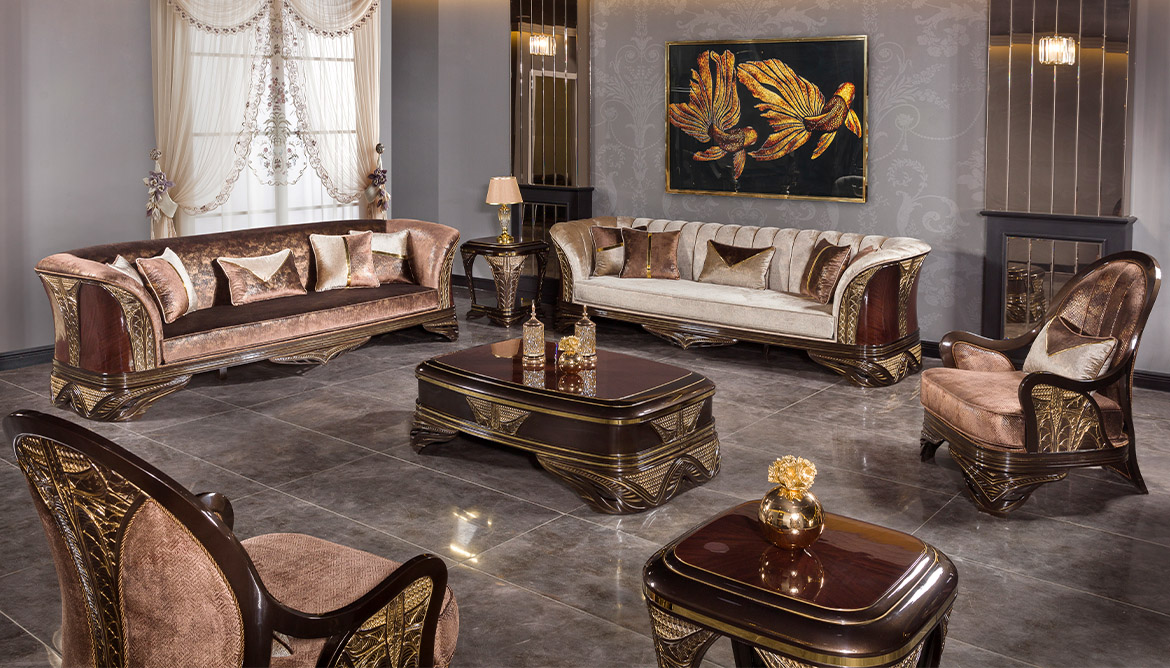
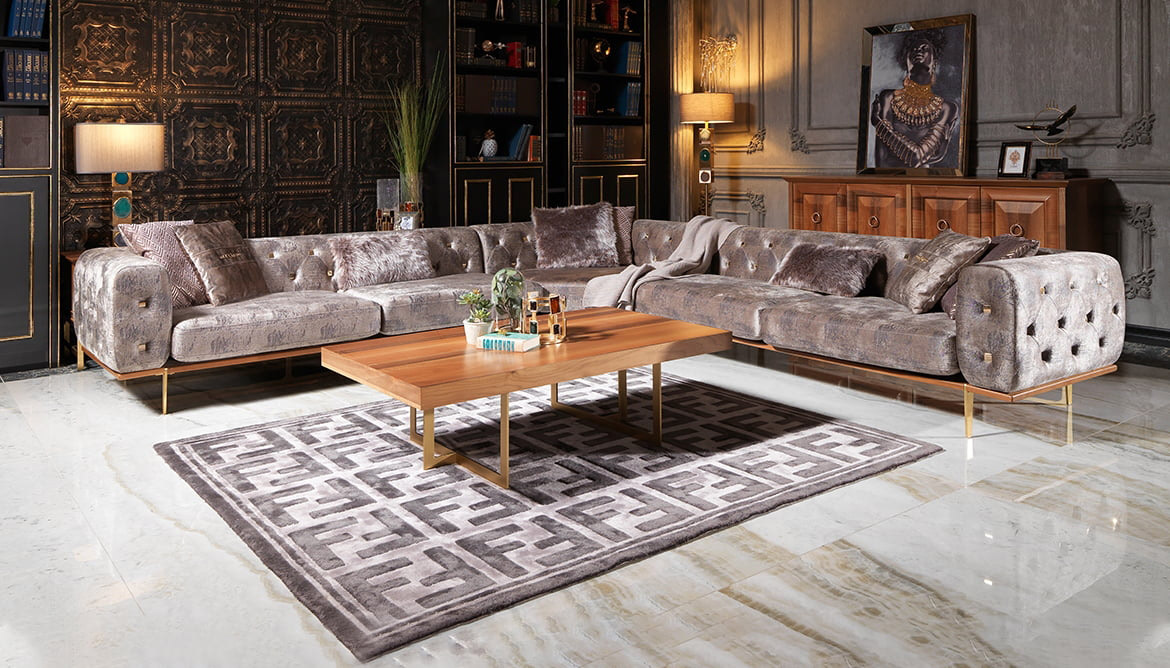
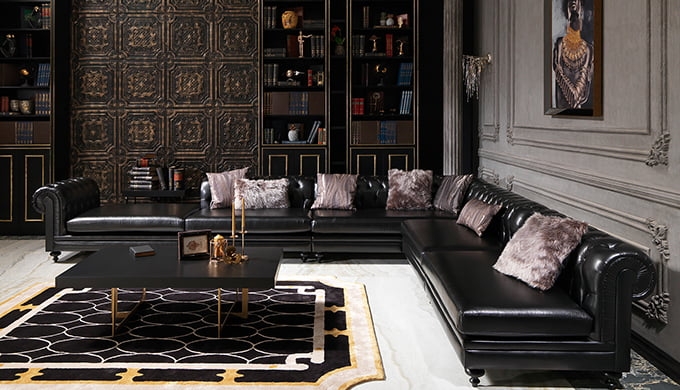
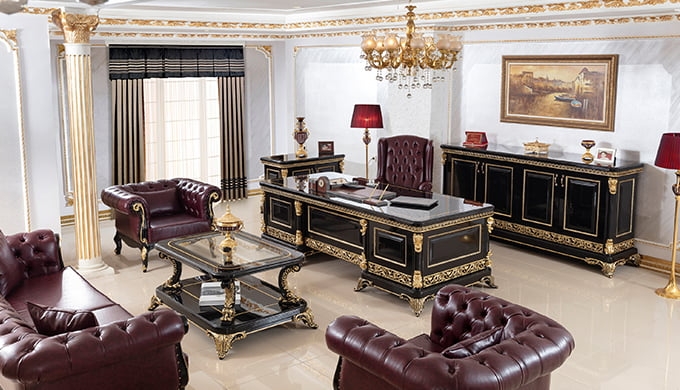
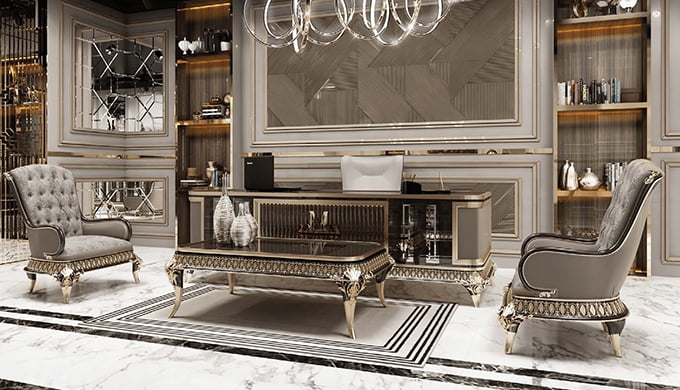
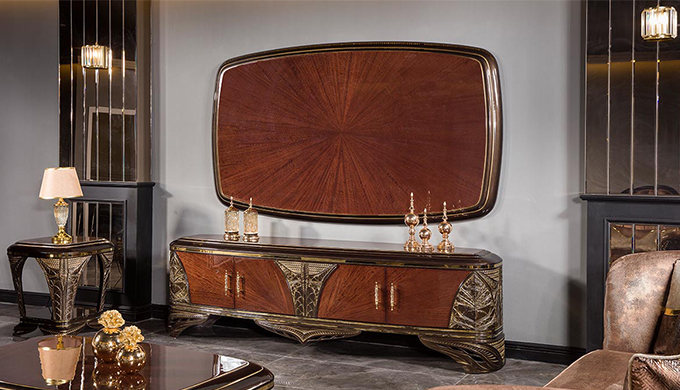
In today’s fast-paced world, filled with a bombardment of information and stimuli, our homes are the most precious harbors we take refuge in. However, if this harbor is filled with unnecessary items, mismatched colors, and eye-straining details, shaking off the tiredness of the day and finding the inner peace we seek becomes almost impossible. Right at this point, “minimalism,” which has turned into a global phenomenon in recent years, ceases to be just a temporary decoration trend and offers a permanent life philosophy. Shaped by the “Less is more” approach, minimal home decoration saves your living spaces from mediocrity; it lets them breathe, refreshes them, and adds a modern elegance.
In the international design world, minimalism does not mean leaving rooms empty or creating a cold atmosphere. On the contrary, it is a conscious choice where every item has a purpose, quality takes precedence over quantity, and aesthetics are crowned with simplicity. Whether you want to feel the warmth of the Scandinavian style or the serenity of the Japanese Zen philosophy in your home; the key to achieving global standard elegance lies in applying the right rules. In this comprehensive guide, we deeply examine step-by-step minimal home decoration that will allow you to step away from the clutter and reach flawless aesthetics, along with the 5 golden rules you must never skip in the design process.
The Power of Minimalism as a Global Trend
Minimalism is a universal design language that transcends borders and resonates across different cultures. The main reason it appears everywhere, from a luxury penthouse in New York to a smart studio apartment in Tokyo, is its relaxing effect on human psychology. This style, which reduces mental fatigue, makes the space look much larger and brighter than it is. If your vision is not only to decorate your home but to give it a global and timeless identity, you must take your steps strategically and use the potential of the space to the maximum level.
The 5 Golden Rules of Step-by-Step Minimalist Decoration
The basic principles you need to focus on when building a minimalist home are weeding out the unnecessary and displaying the rest in perfect harmony. Here are 5 essential rules to help you achieve this harmony:
Rule 1: Functionality Comes Before Everything Else
In minimal decoration, no item is placed in a room just because it “looks good.” Every piece of furniture or object you choose must serve a purpose alongside its aesthetic value. An unused coffee table, a giant vase bought just to fill a corner, or an uncomfortable but stylish armchair is contrary to the nature of minimalism. Furniture that offers hidden storage spaces allows you to use the space efficiently and eliminates eye-straining clutter. If you are looking for rational solutions in design, you can take the first step by examining our collections that will add functionality to your space.
Rule 2: Harness the Power of a Neutral Color Palette
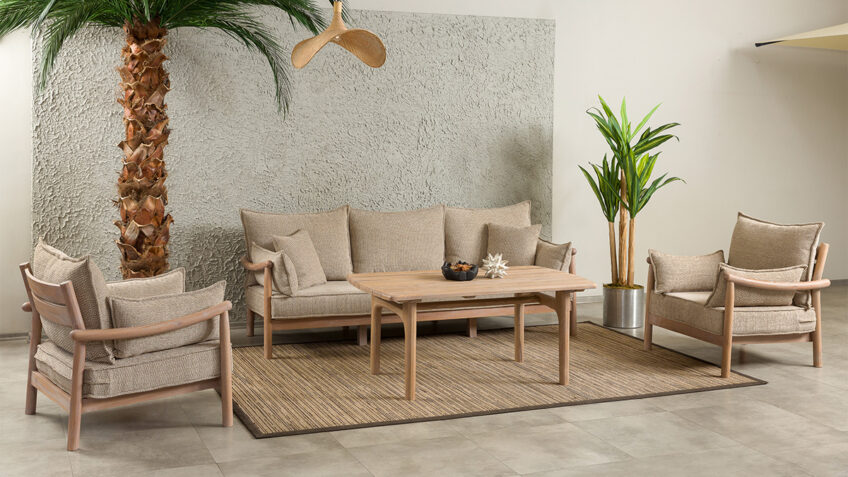
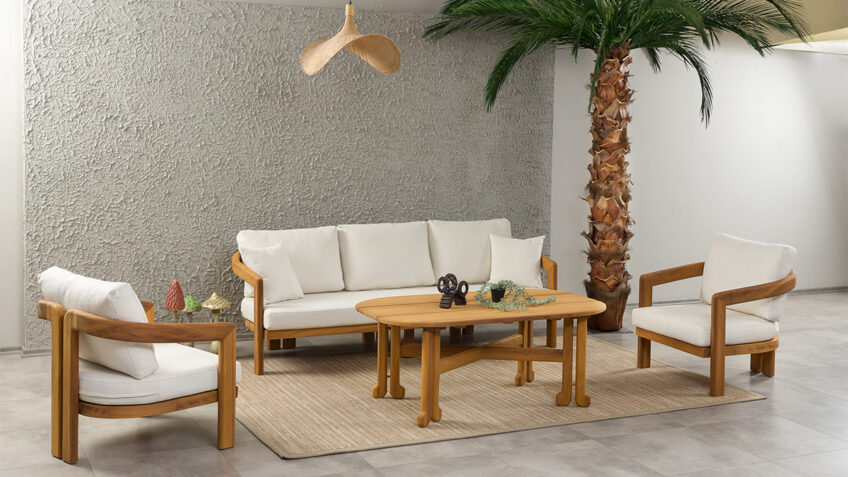
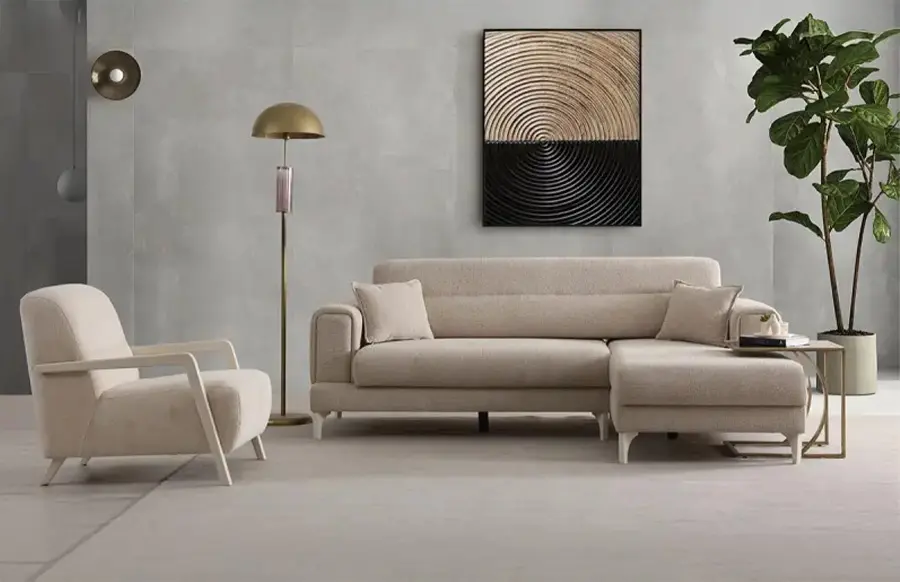
One of the cornerstones of the global understanding of minimalism is color selection. Neutral tones that do not tire the eyes, expand the space, and reflect light wonderfully are indispensable for this style. White, beige, ivory, light gray, and earth tones should form your main color palette in a wide range from walls to furniture. However, this does not mean your home will be boring. After creating a neutral background, you can add depth to the space by creating contrast with strong colors like anthracite, olive green, or matte black.
Rule 3: Choose Quality Furniture That Will Be the Focal Point
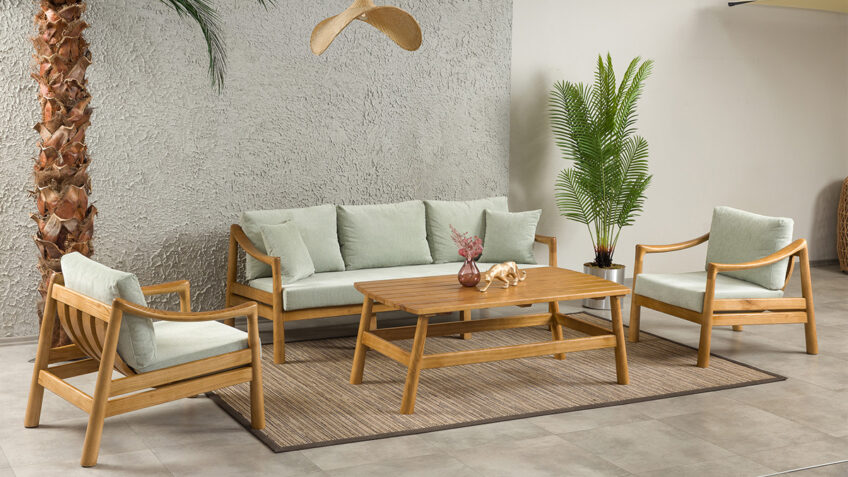
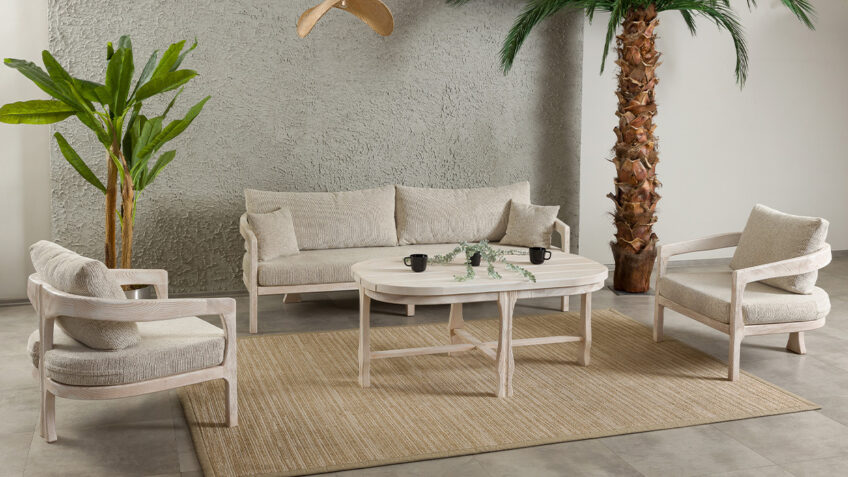
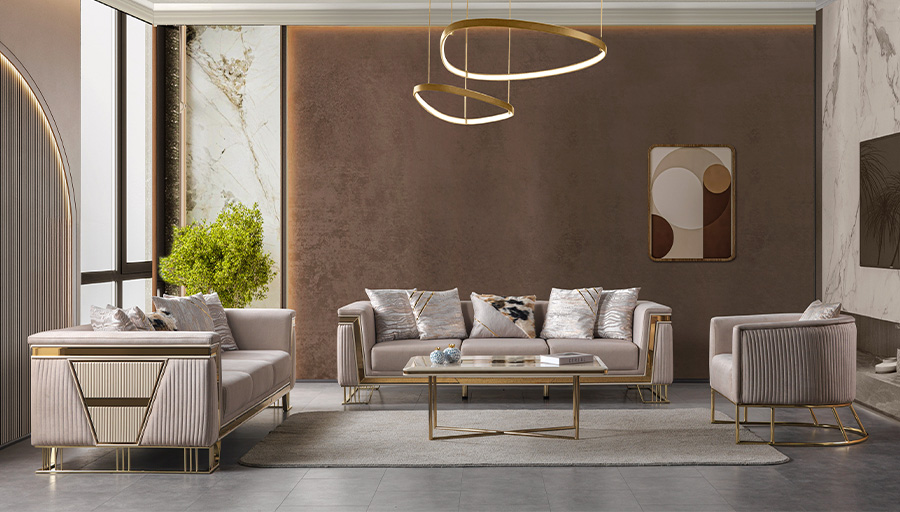
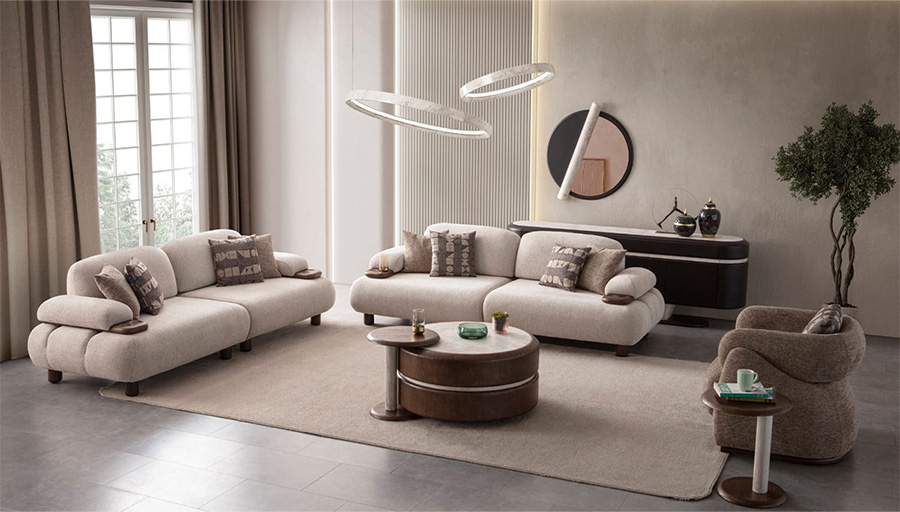
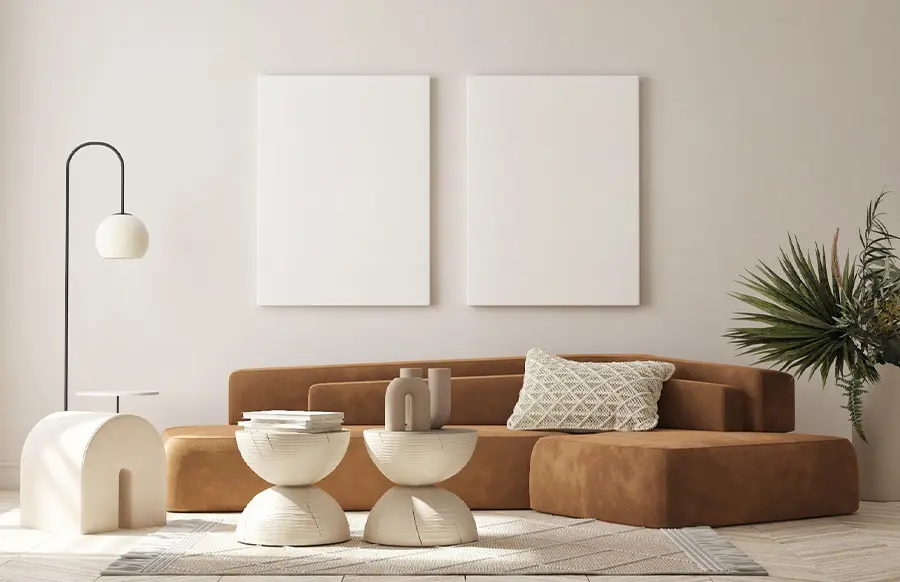
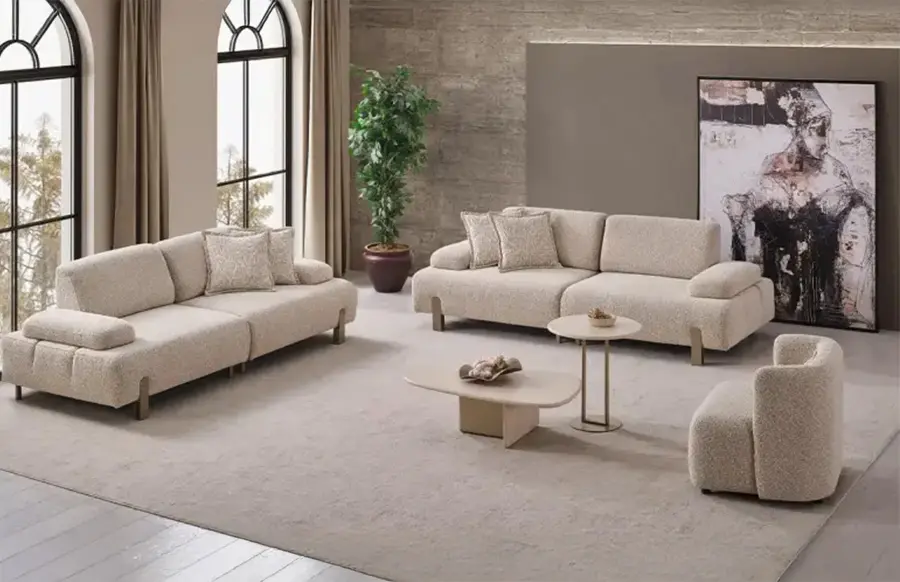
Since there are few items in minimalist spaces, every existing piece directly draws attention. For this reason, instead of ordinary, short-lived pieces that give a mass-produced feeling, you should invest in timeless furniture crafted with quality materials that stand out with their workmanship. For example, a high-quality sofa placed in the middle of your living room, dominating the space with its sculptural stance, single-handedly creates that luxurious and refined effect that dozens of small decorative objects cannot. Trust the expert touch for designs that will add value to your home and maintain their form for many years.
Rule 4: Use Natural Light and Layered Lighting Correctly
Minimalism loses its effect in a dark and dim space. It is essential to make the maximum use of natural light, keep the front of the windows open, and prefer light, translucent linen or tulle curtains instead of heavy, thick curtains. After the sun sets, “layered lighting” (general, task, and accent lighting) should come into play. Instead of using a single powerful ceiling light, you should emphasize the texture and warmth of the space with floor lamps, sconces, and hidden LED lighting placed in different corners of the room.
Rule 5: Adopt the “Less is More” Philosophy in Accessories
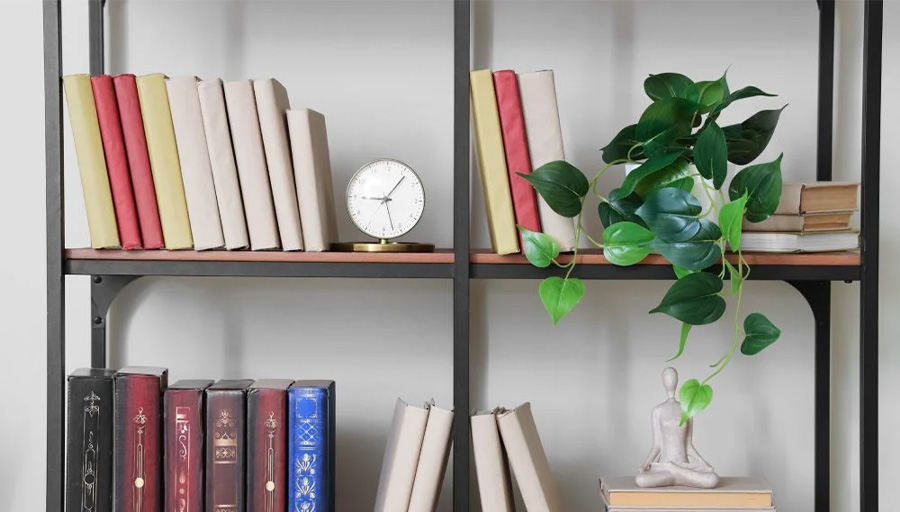
The most challenging point for many people transitioning to minimalism is accessories. Piles of trinkets on the coffee table and irregular frames completely covering the walls absorb the energy in the space. Instead, focus on a few specific pieces that you truly value, that have the quality of an artwork, or have high design value. A large, abstract painting, a handmade ceramic vase, or a designer table clock adds a sophisticated touch to the space. You can browse our carefully selected complementary pieces to perfect your decoration.
Material and Texture Selection in Minimalist Decoration
Because colors are limited in minimal spaces, the only way to prevent the space from looking cold and sterile is to use textures. The right combination of different materials determines the soul of the room. In the table below, you can clearly see the material and approach differences between minimalist and traditional decoration:
| Comparison Criteria | Minimalist Decoration Approach | Traditional Decoration Approach |
|---|---|---|
| Furniture Lines | Straight, sharp, clear lines, and organic forms. | Carved, curvy, heavily embroidered details. |
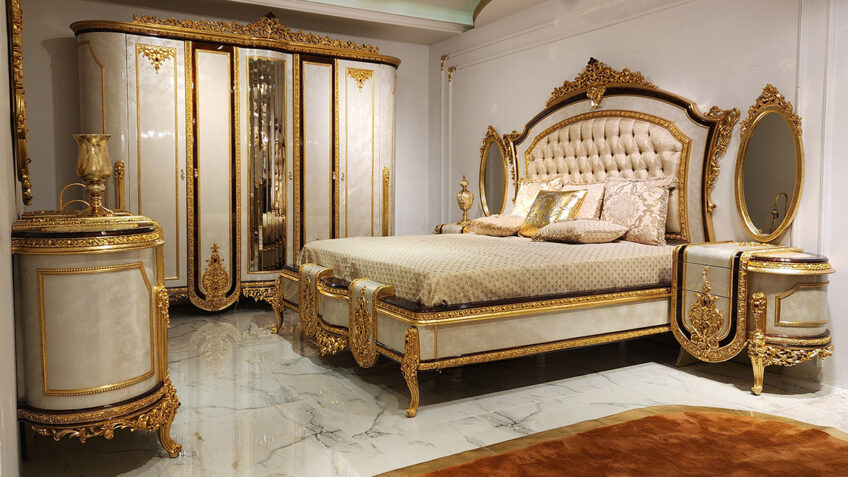
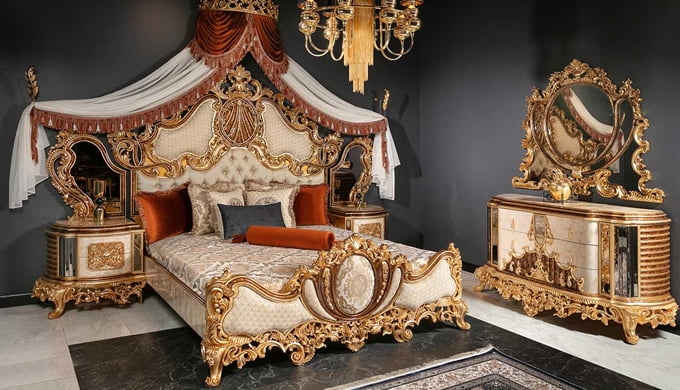
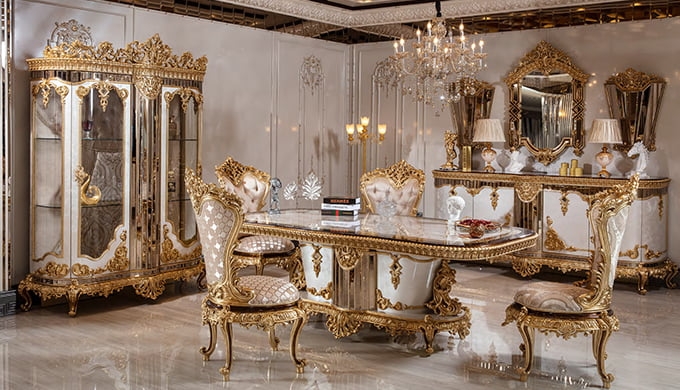
| Main Materials | Natural wood, raw metal, glass, marble, and linen. | High-gloss polished woods, heavy velvet, gold leaf, and gold embroidery. |
| Flooring Preference | Wide parquets with seamless joints, poured concrete, patternless rugs. | Complex patterned parquets, heavily motiffed hand-woven or classic rugs. |
| Visual Focus | The design itself, negative spaces, and architectural details. | Crowded patterns, wallpapers, and symmetrical arrangement of items. |
What to Do When Transitioning to Minimal Home Decoration
If you live in a home filled with years of accumulation, the transition to minimalism doesn’t happen overnight. To manage this process systematically and stress-free, you can follow these steps:
- Declutter Ruthlessly: Take every single item in your home in your hands. If you haven’t used it in the last year and it doesn’t give you aesthetic pleasure, get rid of it (donate, sell, or recycle).
- Allow for Empty Spaces: Give up the urge to fill every corner of the room. In minimalism, the space between furniture (negative space) is at least as important as the furniture itself. Empty space allows the items to breathe and show themselves.
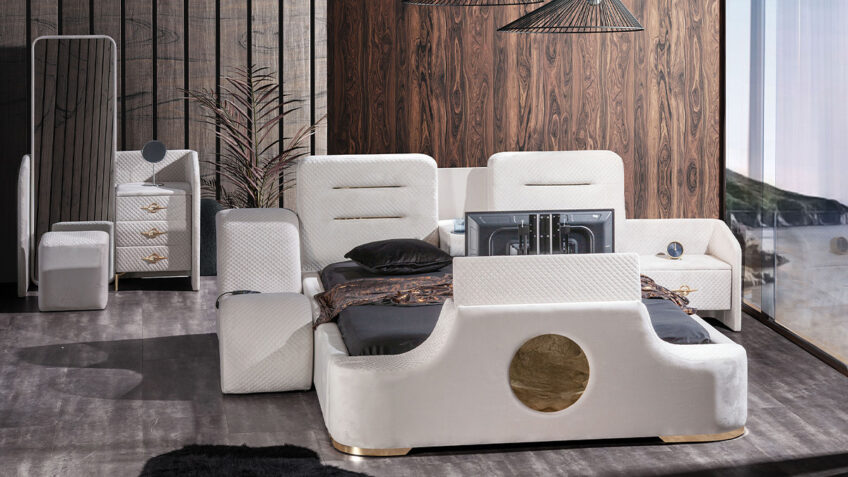
- Build the Core Skeleton: Always start decorating with the largest piece. The bed should be your focal point for the bedroom, and the seating group for the living room.
- Hide Cables and Clutter: The cables of technological devices brought by modern life are the biggest enemy of minimalism. Achieve a smooth look by using hidden cable channels and closed cabinet systems.
- Shop with a Focus on Quality: When you add a new item to your home in the future, make conscious choices by asking the question, “Does this piece fit my long-term minimal vision?” instead of acting on momentary whims.
Common Minimalism Mistakes You Should Avoid
While designing an elegant space with an international vision, falling into some common traps is quite easy. For a flawless design, you must absolutely avoid these mistakes:
- Destroying the Warmth: Making everywhere pure white and avoiding textures (wood, wool, plants) can turn the house into an art gallery or a hospital room.
- Compromising on Comfort: Buying an armchair that looks very stylish but is incredibly uncomfortable to sit in is not minimalism, but moving away from functionality. Remember, your home must be livable above all else.
- Ignoring Storage Spaces: Forgetting to buy furniture with drawers or doors to store the items you use in daily life (remotes, magazines, chargers, etc.) while following the less-item rule will lead to great clutter in a short time.
- Creating Impersonal Spaces: While trying to exactly copy the cover of a world-famous design magazine, do not forget to reflect your own story, hobbies, and tastes in the space.
Conclusion: Beautify Your Living Space by Simplifying It
Minimal home decoration is an elegant and strong stance against the consumer culture that constantly dictates you to buy things. This approach, where quality materials, rational design, and peaceful color palettes are at the forefront, carries your living spaces to elegance at global standards. While creating a physical change in your home by achieving the perfect balance of functionality and aesthetics, you also gain mental clarity. Remember; designing a good living space is designing your life. To give your home the value it deserves and recreate it from scratch with timeless and quality furniture, browse our expert collections now and experience the luxury of simplicity.
Frequently Asked Questions (FAQ)
1.Is minimalist home decoration expensive?
No, on the contrary, it is much more economical in the long run. Instead of constantly buying cheap and temporary trendy items, minimalism encourages you to allocate your budget to a few but high-quality, lifelong, and timeless pieces of furniture.
2. How to apply minimalist style in small houses?
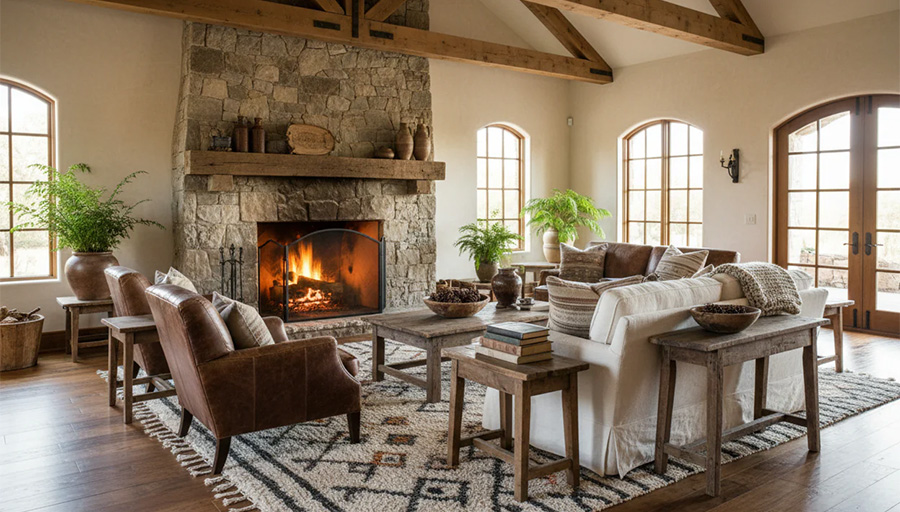
To avoid the stifling effect of classic rustic in small homes, the “modern rustic” style should be applied. By using light-colored walls (white/cream), unbulky wooden furniture with thin metal legs, and abundant natural light, the spaciousness of the space is preserved while the warmth of wood can be included in the environment.
3. Should only white and gray be used in minimal decoration?
Absolutely not. Although neutral colors like white, gray, and beige are taken as a basis, natural and warm colors like wood tones, brick red, olive green, and navy blue can easily be used as accent colors.
4. Is minimalism the same as modern decoration?
Although they are very similar to each other, they are not the same. While modern decoration focuses on periodic materials and technologies (glass, steel, chrome); minimalism is a philosophy that focuses more on reducing the amount of items, functionality, and the aesthetics of ’emptiness’ in the space.
5. How can I make my home look simpler and more elegant?
As a first step, eliminate clutter at eye level. Minimize the number of items on surfaces (coffee tables, counters), hide cables, and make the highest quality, most eye-catching furniture in the room the focal point of the room.